Defining Great Call Quality in Headphones and Earbuds

The science of advanced mic configurations, voice targeting and noise blocking.
Taking a phone call from a busy coffee shop or a breezy sidewalk is often a test of patience. You answer the call, wondering whether the person on the other end can actually hear you or if they’re straining against background noise. Making sure your voice comes through clearly without using a bulky boom microphone requires an intentional balance of acoustic geometry, fast digital processing and smart software.
Clear call quality in wireless headphones and earbuds depends on three coordinated systems: multi-microphone arrays, directional beamforming microphones and intelligent noise-filtering software. Microphones capture sound from multiple physical positions, with some allowing internal processors to calculate the direction of your voice thanks to beamforming while others help the processors isolate your speech from ambient noise. Voice-targeting algorithms then suppress distractions like traffic, wind and room chatter while preserving your natural tone.
Whether you choose over-ear headphones with spacious multi-mic layouts or more compact earbuds with microphones positioned closer to your mouth, this type of system ensures that conversations remain clear even if you’re taking a call in a noisy environment.
Table of Contents
- What determines call quality in headphones and earbuds?
- How microphone arrays and beamforming mics isolate your voice
- How voice-targeting algorithms block background noise
- Are earbuds or over-ear headphones better for phone calls?
- Finding the right balance between music and calls
What determines call quality in headphones and earbuds?
Call quality is not simply a matter of microphone volume. A high-gain microphone with poor acoustic tuning merely amplifies room noise alongside your speech. True call clarity relies on signal-to-noise ratio: maximizing the vocal frequencies reaching the caller while reducing background distractions to near silence.
Three components shape that performance:
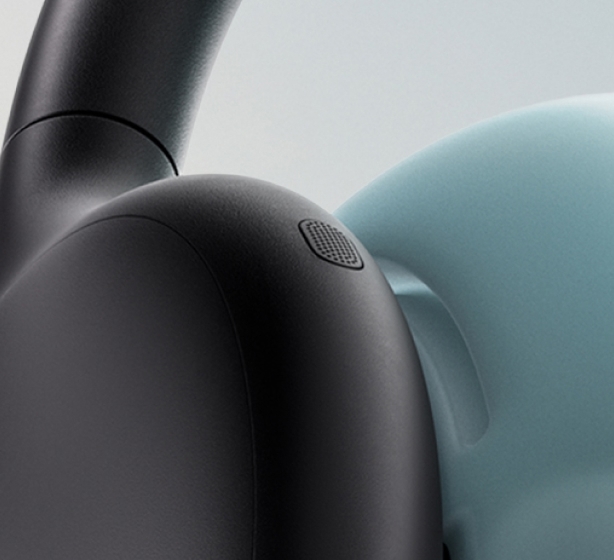
Physical microphone placement: The number, angle and protective mesh shielding each port.
Directional beamforming: Coordinated processing across multiple microphones to identify the source of your speech.

Voice-targeting software: Algorithms that analyze sound waves in real time to filter out ambient noise.
When these components coordinate seamlessly, your voice comes through clearly without you needing to shout.
How microphone arrays and beamforming isolate your voice
A single omnidirectional microphone captures sound equally from every direction, treating a barking dog with the same priority as your voice. Modern headsets solve this by using coordinated microphone arrays.
Beamforming relies on tiny differences in acoustic arrival time. Because two or more microphones sit at slightly different distances from your mouth, your voice reaches each microphone at a slightly different time. Digital signal processors measure those differences and delay some mic signals so that your voice lines up across all of them. With this alignment, the processor creates a virtual “beam” aimed at your mouth that emphasizes your voice more than any surrounding noise.
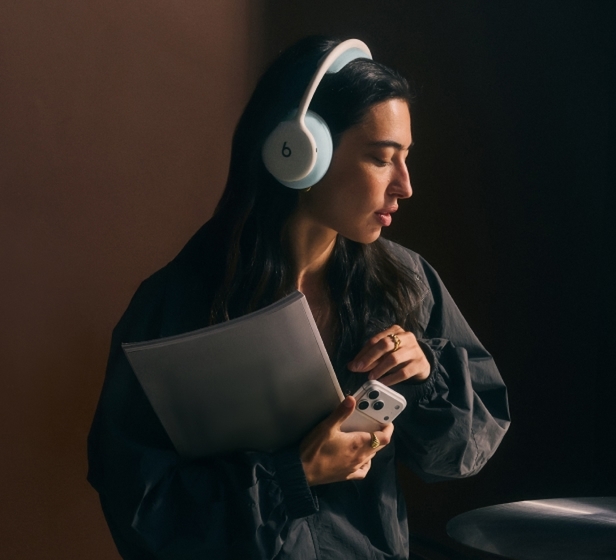
Over-ear headphones offer more area to optimize microphone placement. For example, Beats 360 uses nine digital microphones in total. Eight handle Active Noise Cancellation (ANC), while three capture your voice, sharing two with the noise-cancelling system. This coordinated layout keeps speech clean and distinct.
How voice-targeting algorithms block background noise
Microphone hardware captures sound, but software decides what the caller actually hears. Once the beamforming system isolates your voice’s direction, voice-targeting algorithms clean up irregular noises that share frequencies with human speech.
These algorithms are trained on extensive audio datasets. In Beats Studio Pro and Beats Solo 4, the noise-learning algorithm was developed using over 7,000 hours of audio from noisy environments, helping it separate your voice from background sounds like sirens or keyboard clicks.
Are earbuds or over-ear headphones better for phone calls?
Both form factors deliver clear voice performance, but they rely on different acoustic advantages. Choosing between them depends on where you take most of your calls.
Over-ear headphones benefit from physical scale. Larger earcups allow engineers to place microphones further apart, creating wider baselines that improve beamforming accuracy. The ear cushions also provide a nice acoustic seal for passive noise cancellation, keeping room noise out of your own ears so you hear callers comfortably. For desk work, video calls and home or shared offices, over-ear designs provide steady comfort and dependable voice isolation.
Wireless earbuds hold a slight advantage in microphone positioning. Because they rest in your ear canal, their microphone ports sit closer to your jawline and point naturally toward your mouth. To manage wind turbulence outdoors, earbuds rely on beamforming mics and voice processing tuned to mitigate wind noise. If you need portable gear for calls during commutes or outdoor walks, earbuds provide clear voice pickup in a pocket-sized design.
Headphones and earbuds that are great for calls and music
If you use one device for both listening to music and taking calls, you need acoustic hardware that handles both tasks.
Beats headphones and earbuds are great options when you want high-fidelity audio for music and clear, dependable call quality, regardless of your environment.

Beats 360
Our premier over-ear headphones combine custom drivers with up to 1.75 times more noise cancellation than Beats Studio Pro.1 A nine-microphone array and an AI-trained algorithm isolate speech smoothly, while interchangeable Performance Knit cushions support all-day wear.2
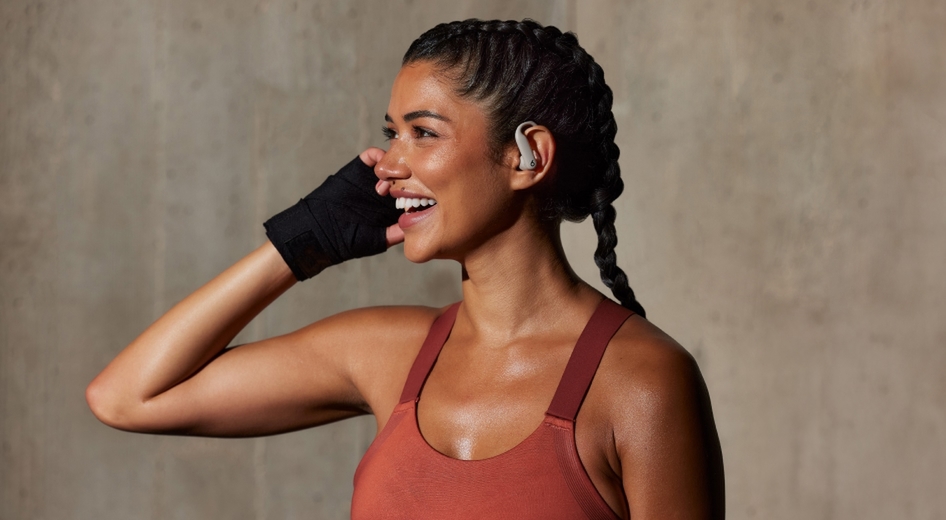
Powerbeats Pro 2
Built for movement with secure-fit earhooks, each earbud includes three advanced microphones identical to those used in AirPods Pro 2, delivering exceptional voice targeting and noise suppression.

Powerbeats Fit
With the stability of an earhook but from a unique secure-fit wingtip design, Powerbeats Fit is a true in-ear form factor. It leverages a total of six microphones, along with an accelerometer in each earbud and a wind-noise mitigation system, to effectively target your voice and filter out external noise for high-quality voice performance.
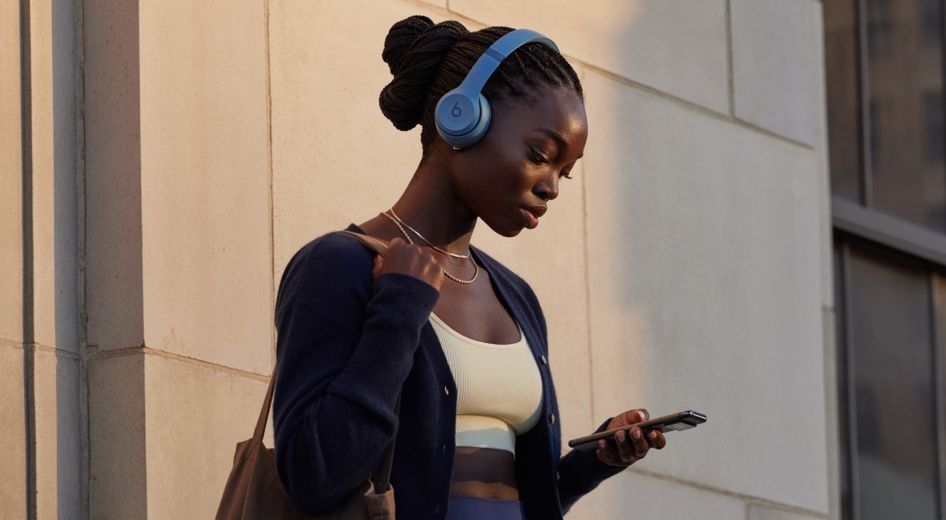
Beats Solo 4
At just 217 grams, Beats Solo 4 pairs digital beamforming microphones with our 7,000-hour trained algorithm, offering dependable call quality in a lightweight on-ear design.
Key Takeaways
Hardware and software work together: Call clarity requires physical multi-mic arrays to capture sound direction, beamforming to isolate speech, and advanced machine learning algorithms to remove background noise.
Trained software isolates speech: Complex models trained on thousands of hours of audio identify vocal patterns and suppress background chatter without distorting your voice.
Noise cancellation is effective in over-ear headphones and in-ear earbud designs: Even if they have ANC, over-ear headphones and in-ear earbuds offer additional passive isolation by creating a seal that blocks out some background noise without any audio playback or ANC enabled, and each have microphone configurations designed to enhance ANC and call performance.
Two separate noise tasks: Active Noise Cancellation (ANC) helps you hear the caller, while voice beamforming makes sure the caller hears you.
Frequently Asked Questions
Does Active Noise Cancellation make my microphone sound better?
Active Noise Cancellation helps you hear the caller by reducing ambient noise in your ears. Your outgoing voice quality is handled by outward-facing voice microphones, directional beamforming and noise-filtering algorithms that process your speech before transmitting it.
How do earbuds reduce wind noise during outdoor phone calls?
Earbuds manage wind with beamforming mics and voice processing that detect and suppress wind-induced low-frequency noise, so rushing air doesn’t come through on calls. A fine acoustic mesh over the microphone ports also diffuses airflow before it reaches the sensor.
How do wireless headphones block background noise during phone calls?
Wireless headphones combine directional beamforming microphones to isolate your vocal corridor with noise-filtering algorithms that identify speech harmonics and suppress ambient clutter.
On Beats 360, an advanced AI-trained algorithm and beamforming mic system locks onto your voice and filters background noise like wind.
1 Up to 1.75x more combined active and passive noise cancellation compared with Beats Studio Pro when tested in accordance with IEC 60268-24.
2 Beats 360 sold with color-matched ear and headband cushions; additional cushion kits sold separately.